


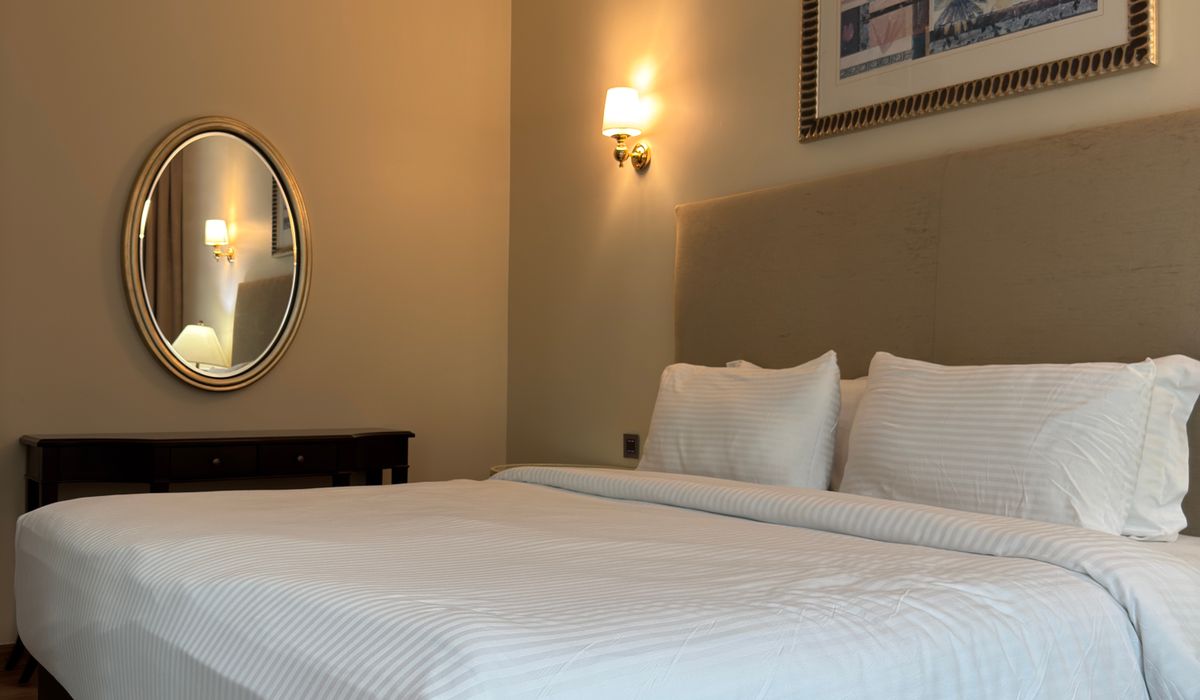
Why guest house policies vary so much
Most guest houses around Marlow, Henley-on-Thames and the wider Thames Valley are small, owner-run places with perhaps four to ten bedrooms. When you are working with that few rooms, a single late cancellation on a busy weekend is not an annoyance — it is a meaningful chunk of the week's income. That is why the terms at an independent guest house often look firmer than those at a large chain hotel down the road, and why two houses sitting a mile apart can ask for quite different things.
None of this is designed to catch you out. It is simply that the person taking your booking is usually the person who will be cooking your breakfast, and they need to know where they stand. Read the small print with that in mind and it all makes far more sense.
What a deposit actually means
The word "deposit" gets used for at least three different things, and mixing them up is the most common source of friction. Ask which one applies to you before you hand over card details.
- A card guarantee. Nothing is taken at the time of booking; your card details are simply held so that a no-show or late cancellation can be charged.
- A booking deposit. Usually the first night's rate, or 25 to 50 per cent of the total for longer stays. This is deducted from your final bill, not charged on top of it.
- A security or damage deposit. Common for groups, hen parties and wedding bookings, typically £50 to £200 per room. It is refundable after departure, assuming nothing is broken and the room does not need an hour of extra cleaning.
Full prepayment is normally only requested for non-refundable rates or for the big local event weekends. The balance is usually settled on arrival or departure, and a growing number of houses prefer card to cash simply because it keeps their records straight.
Cancellation windows and what "free cancellation" really means
A 48-hour window is typical for quiet midweek nights in Marlow or Maidenhead. Seven days is the usual standard for a normal weekend. Fourteen or even twenty-eight days appears the moment you are booking around a regatta, a wedding or the Christmas party season.
"Free cancellation until Thursday at 2pm" does not mean you can cancel on Thursday evening and walk away. It means the clock stops at that stated hour, and if you call afterwards you will be charged — often the first night rather than the whole stay, though not always. Check three things: the deadline itself, the exact time, and whether it is measured in the guest house's local time. Diarise it. A surprising number of disputes come down to somebody cancelling at 3pm on the day the window closed at noon.
Also ask whether you can move your dates rather than cancel outright. Many owners will happily shift a booking once, provided you give reasonable notice and the new dates are not in peak season.
The local calendar changes everything
Hospitality in the Thames Valley runs on a rhythm that visitors often underestimate. Henley Royal Regatta and the Henley Festival fill every bed for miles in late June and early July, sometimes a year in advance. Rewind and the Marlow regatta weekends do the same in summer. Add Christmas party nights, half-term, bank holidays and the odd wedding at a riverside venue, and you have a calendar where deposits are typically non-refundable and non-transferable.
If you are booking for one of those dates, treat the deposit as spent the moment you pay it. If your plans might change, either buy travel insurance that covers cancellation or hold off until the dates are certain.
Groups, wedding parties and longer stays
Group bookings almost always work on a single lead name who is responsible for the whole party, including rooms that go unused. Expect a rooming list to be requested a fortnight or so beforehand, a minimum two-night stay at weekends, and a schedule for staggered arrivals so the hallway is not chaos at 4pm.
Corporate guests on longer Thames Valley contracts often get slightly softer terms — invoicing, a cancellation cut-off of 4pm on the day of arrival, and a fixed weekly rate — but this needs to be agreed at the time of booking, not assumed. If you are booking several rooms for a wedding, ask what happens if one couple drops out: some houses simply charge for that room, others hold the whole party to the original number.
A short checklist before you book
Five minutes of reading now saves a difficult phone call later.
- Read the cancellation section before you enter your card details, not after.
- Note the deadline and the exact time in your own calendar, with a reminder a day early.
- Ask whether the deposit is refundable, transferable, or simply deducted from the bill.
- Confirm what happens on early departure — many houses still charge for the nights booked.
- Check whether a security deposit applies and when it is returned.
- Keep the emailed confirmation. It is your record of what was agreed.
- Ask, politely, about anything unclear. A good owner would far rather answer a question today than argue about a charge next month.
Get those details straight and you can relax into the good part: a comfortable room, a proper cooked breakfast, and a morning walk along the river before the day begins.


Leave a reply